10 Lessons from Startup Life
By Arash Shiva
“We can think of wisdom as the ability to get the important things approximately right.” - Nick Bostrom
A filmmaker needs a camera for a weekend. Someone nearby owns it but will not use it until Tuesday. Connecting them sounds simple until you ask who will pay if something breaks, whether the gear will be there on time, and how either person knows they can trust the other. Those questions shaped ShareGrid, the peer-to-peer rental marketplace we began building in 2015. It became a sustainable business in under three years, but the path there involved many decisions we only understood after making them.
These are ten lessons I keep coming back to. None is a formula. They are questions that helped us decide what to build, what to leave alone, and when to change course.
1. Follow Your Ikigai
My business partner and I went through dozens of ideas. ShareGrid was the one that came closest to our Ikigai, the overlap between what we cared about, what we knew, and what people needed. I've been a longtime hobbyist photographer; Marius went to film school, and Brent, who joined later, worked as a Director of Photography in LA. We understood why someone would need gear for a shoot, and why its owner would worry about handing it over. We were building something for ourselves and our friends as much as for strangers.
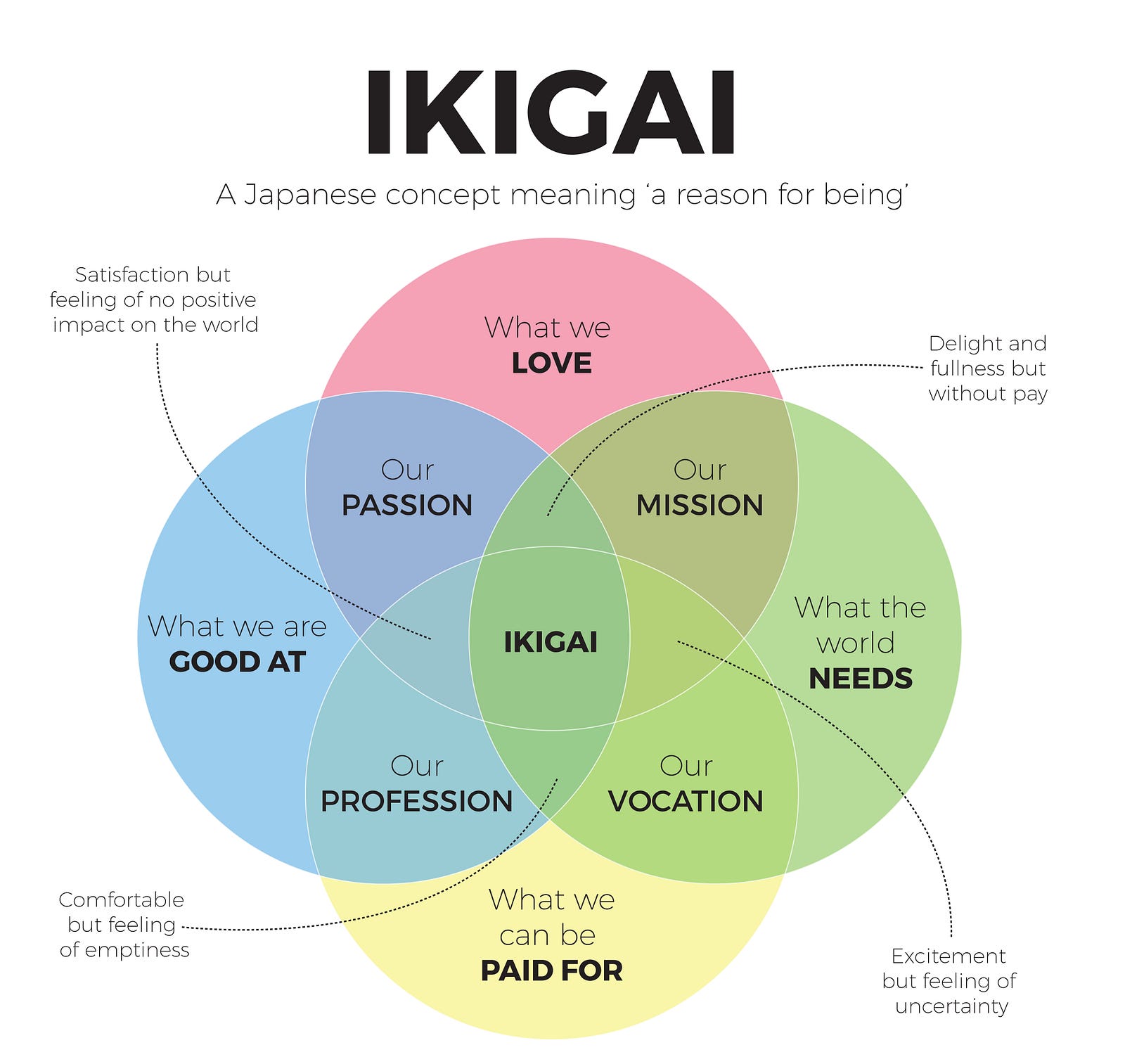
Marius and I had also worked together at Groupon, learning about local marketplaces and product design, and I had built and sold startups before. That experience did not guarantee we could make another marketplace work. But filmmakers needed access to equipment while owners had gear sitting idle, and we thought we could make that exchange useful enough to support a business. The idea also connected Jacque Fresco's thinking about a resource-based economy with my earlier thoughts on money. Sharing gear would not solve resource scarcity. It was one small way to use more of what we already had.
2. Don't get distracted
New ideas were never in short supply. The difficult part was saying no to an exciting possibility when the existing rental experience still needed work. After finding signs of product-market fit, we had to spend time on the less glamorous task of making that experience more reliable. Focus can feel repetitive. It also gives the people who depend on the product a chance to trust it.
3. Flip the problem on it’s head
When someone needs a complicated kit, asking them to search every listing may put too much of the work on the renter. We explored a Pro bidding system that began with the job: describe what you need, then let rental pros offer gear that fits. It might have saved renters time, but only if the extra effort for pros was worth it too. Moving friction from one side of a marketplace to the other is not the same as removing it.
We asked a similar question with a reverse cart, starting with a renter's needs and working back toward equipment. Compared with KitSplit's more conventional cart, it felt like a different way to approach the problem. Was it actually making the choice clearer, or just moving the complexity to another screen? We needed to learn that from renters rather than from our own excitement about a new interface.
4. Automate
An event lets us meet filmmakers face to face. A search page cannot do that, but an event ends, and much of the work has to begin again. We invested in product pages that could answer a specific gear search long after we had written them. For a small team, the question was how to keep helping someone find equipment even when we were not in the room.
We tried to make newsletters repeatable for the same reason. Writing every email from scratch took time we also needed for members with an immediate problem. Automation could help us stay in touch with renters and vendors; it was not a reason to fill their inboxes with messages that had nothing useful to say.
We’ve put a lot of effort into customer service. Because of that, our main driver of growth is still word of mouth.
5. Hire Carefully, Make Hard Calls
Finding good teammates was hard; keeping them was harder. Engineering is a "leveraged profession," as Naval puts it. A person with good judgment can change the course of a small team. But skill alone is not enough. We needed people we could trust to ask difficult questions and take responsibility for the answers. I wrote more about those qualities in Hiring and Coworkers.
We worked with engineers who liked building the road as we drove over it. The challenge attracted them, and I think the idea of sharing resources mattered too. But a compelling mission does not make uncertainty or stress disappear.
We also hired too early when we were feeling optimistic about growth. Later, we had to let people go to keep the company alive. No hiring maxim makes that decision easier for the people who lose their jobs. It taught me to be more honest about what the business can support before asking someone to build their life around it.
6. Focus on nodes vs new
Once rentals were working, we started considering another revenue channel. SaaS products and digital marketplaces sounded interesting, but each would have pulled us away from the people and gear we already understood. Buy & Sell was closer to the rental business. That did not make it easy to build; it made the question more concrete. Could we serve the same community in another way without losing focus on the first one?
7. Functionality over design
My co-founder and I had spent years focused on design, so it felt strange to put more of our early energy into finding members than polishing the interface. But a beautiful rental page with no available gear would not help a filmmaker. We needed the basic experience and the selection to work first. Design still mattered; we just had to decide which design problems were worth solving at that stage.
8. Marketing is important
It is tempting to believe a good product will find its audience. A two-sided marketplace does not give you that luxury. A renter needs gear to choose from; an owner needs someone who will actually rent it. We had to bring owners in first, one conversation at a time, so that filmmakers who arrived later would find something useful. With a small budget, that meant doing marketing by hand and listening closely to what people asked for.
With the initial manual approach, we were able to get enough early users to help us refine the product to a point where we could do a public launch. That first community had its “tipping point” about one year in.
We never found a neat line between product and marketing. A good rental experience gives people a reason to tell a friend, while each conversation with a potential member shows us what the product still lacks. We needed both, even when it would have been more comfortable to stay behind our screens and keep building.
9. Prioritize what matters
Build roads first
Before we could polish a checkout page, a renter needed a reliable way to pay and an owner needed to know what would happen next. We had to decide what to design ourselves and what a provider like Braintree could handle. Payments were too important to ignore, but building every piece from scratch before someone could rent gear would have delayed the thing we needed to learn from. We tried to get that basic road working first.
We also considered whether parts of the experience needed separate domains. Keeping them together helped us think about finding gear and renting it as one journey, rather than a collection of projects a member had to navigate. One domain was simpler for members, even if it asked us to be more disciplined about what belonged in the product.
For renters, the promise came down to service, selection, and savings. If we could help people find the gear they needed, give them enough options to choose from, and make renting more affordable than buying everything themselves, we had something worth coming back to. That was a useful test for every new feature: did it make one of those three things better, or were we just adding another thing to maintain?
Focus on the 80/20
Early on we needed owners to list gear so renters would find a selection. Later, when the marketplace had more to offer, we put roughly 80% of our attention into attracting and retaining renters and 20% into retaining vendors. That was a choice about where our limited time could do the most good, not a rule that owners mattered less. Their gear needed to be rented for the marketplace to work for them.
The same tradeoff appeared in Iterable. We could build email campaigns for both sides equally, or spend more effort helping renters return when they needed gear. We chose to focus on demand. A vendor with a listing needs a booking more than another message from us.
10. Stay lean and iterate
Stay lean
It's easy to lose track of money when every expense can be justified as an investment in growth. A new tool, another hire, or a bigger marketing budget might each make sense on its own, but together they can quietly raise the cost of keeping the business alive. We had to keep asking what was actually helping members rent gear and what could wait. Staying lean gave us more time to learn from the business before committing to a bigger version of it.
Innovate, test, iterate
We wanted to know whether searching for several pieces of gear at once solved a real problem. Using what we already had in Pro gave us a way to explore a multisearch MVP before committing to a new system. It did not answer every question, but it was a better place to start than months spent perfecting something no one had used.
Rent-to-buy and flash deals were two other ways to give people a reason to return. Each would have pulled the business in a different direction. We explored how they might fit with rentals before treating either as the next big thing. A good idea is not necessarily the right idea for the community we already serve.
The cart taught us the same lesson on a smaller scale. We A/B tested changes instead of assuming our first design was the clearest. Watching what people did as they reviewed gear and moved toward checkout could tell us more than a long debate about what looked best. For any MVP, we tried to build just enough to answer the important question, then decide what deserved more time.
Keep it simple
A two-sided rental marketplace is not simple. A booking happens online, but the equipment, handoff, and possibility of damage are all real. Compared with a SaaS product, there are more things that can go wrong outside the software. We could not remove those responsibilities by making the interface look clean. We could, however, avoid adding another moving part unless it helped someone rent or share gear more confidently.
Don't raise too much
Raising money can make it easier to move quickly, but it also changes what the business has to become. A larger round brings a larger expectation for growth, whether or not the market is ready for it. We wanted room to build something sustainable, not to spend ahead of what we had learned and then race to justify the spending.
That was why we steered away from trying to raise a Series A. It would have been tempting to treat another funding round as proof that we were succeeding, but it was not the goal. We needed to keep improving the experience for renters and owners and let the business tell us whether it could support the next step. I still think about that distinction when a new opportunity looks exciting: will it help the people already counting on us, or just make the company look bigger?
Related musings
The Infrastructure of Trust
PublishedIdentity, provenance, and embedded verification in a world of cheap synthetic media.
ShareGrid and the Digital Guild
PublishedHow sharing expensive gear can build trust and connections between local filmmakers.
Hiring and Coworkers
PublishedThe judgment, care, and accountability I look for in people I work with.